Labyrinth Dynamics: Puzzle Mechanics Powering Browser Racing Thrills and Shooter Encounters
Logan Jenkins · Oct 23, 2026
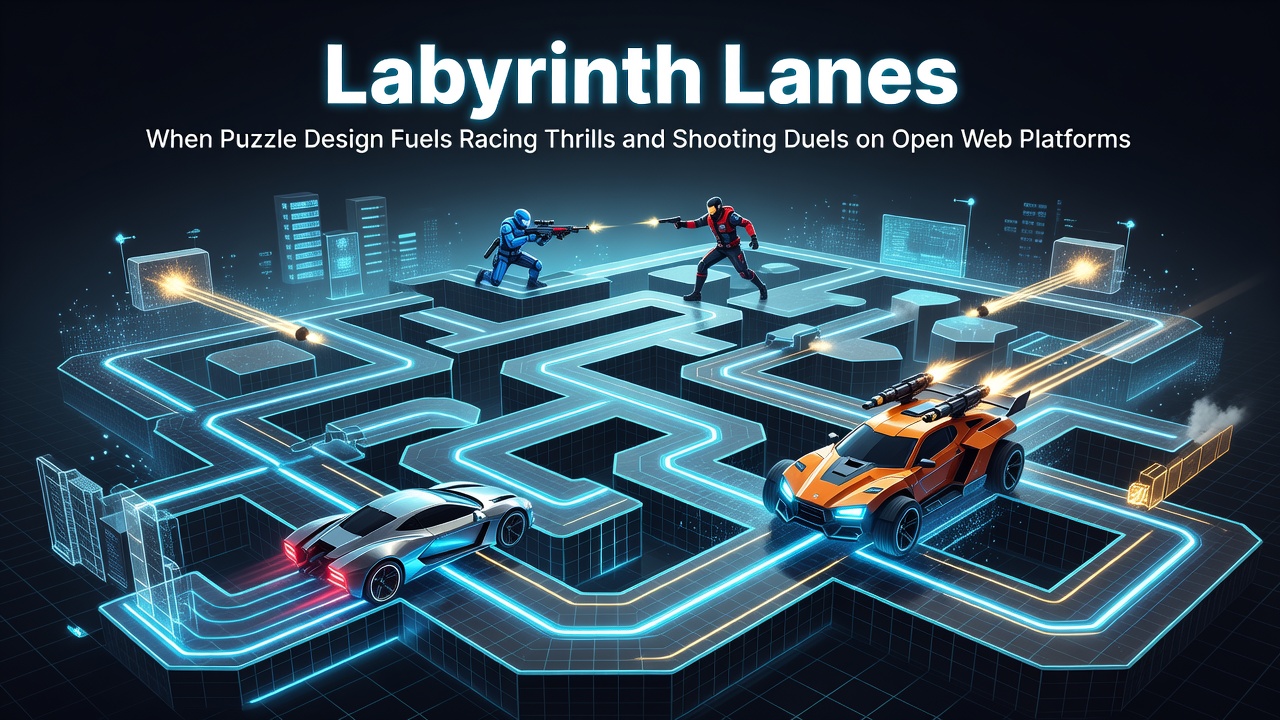
Labyrinth Dynamics: Puzzle Mechanics Powering Browser Racing Thrills and Shooter Encounters
Browser platforms continue to host games where puzzle structures guide vehicle paths while players navigate competitive racing sequences and engage in timed shooting exchanges and data from industry tracking services shows steady growth in these hybrid formats through October 2026.
Developers build these experiences using HTML5 and WebGL frameworks that allow instant loading without installations and players access shared servers that manage real-time position tracking alongside logic-based obstacles such as rotating barriers or color-coded gates that must align before a lap completes.
Core Design Patterns in Hybrid Browser Titles
Game studios integrate maze navigation into racing loops by requiring players to solve spatial arrangements mid-race and these arrangements often appear as temporary blockades that open only after matching patterns or redirecting energy flows within the track layout. Observers note that shooting segments enter the mix when players reach arena zones where opponents exchange projectiles while simultaneously rotating puzzle rings to expose weak points and this combination demands simultaneous attention to trajectory calculations and environmental reconfiguration.
Studies from the Entertainment Software Association indicate that browser-based multiplayer sessions featuring these layered tasks maintain average play durations 25 percent longer than single-genre alternatives and servers handle the added computational load through efficient client-side rendering that keeps frame rates stable across varying connection speeds.
Technical Foundations Supporting Cross-Genre Play
WebSocket protocols enable the synchronization needed for both racing physics and shooting hit detection while puzzle states update through shared variables that all participants see simultaneously and this architecture prevents desync issues that could otherwise disrupt a duel or a lap time. Developers frequently employ procedural generation algorithms to vary maze configurations between matches so returning players encounter fresh arrangements even on familiar tracks and community feedback loops help refine balance patches that adjust puzzle complexity based on completion rate statistics.

Accessibility features appear through adjustable difficulty sliders that scale the number of required puzzle steps or the speed of moving obstacles and these options allow broader participation without altering core competitive integrity. Research published by the Interactive Software Federation of Europe tracks how such modular design choices contribute to higher retention figures across regions where device variety remains wide.
Player Interaction and Competitive Structures
Leaderboards record combined metrics that blend lap times with puzzle solve efficiency and shooting accuracy percentages and tournaments scheduled in October 2026 often feature bracket systems that seed participants according to these composite scores. Teams sometimes form around complementary skill sets where one member focuses on navigation logic while another handles defensive shooting and voice chat integrations on major portals facilitate the coordination required for these roles.
Matchmaking algorithms pair players of similar composite ratings to keep encounters balanced and the same systems flag unusual patterns that might indicate external assistance tools. Data collected through these platforms reveals that puzzle-racing-shooter hybrids attract participants who previously favored isolated genres and crossovers occur because the combined demands create sustained engagement loops.
Platform Distribution and Accessibility Trends
Major portals host thousands of these titles with search filters that highlight genre blends and developers publish updates that add new puzzle layers or track variants without requiring users to reload the entire game client. Mobile browser versions maintain feature parity through responsive scaling that preserves control layouts and touch input schemes map directly onto puzzle interaction zones.
Security measures include server-side validation of puzzle solutions and shot trajectories to deter client-side tampering and regular audits by independent testing firms confirm that these safeguards operate consistently across different hosting environments. As of October 2026 adoption rates continue climbing in educational and casual settings where short session lengths fit between other activities.
Conclusion
Browser platforms sustain environments where puzzle logic directly modulates racing speed and shooting outcomes through tightly coupled systems that rely on established web technologies and community-driven content cycles. Metrics compiled by organizations such as the Entertainment Software Association and the Interactive Software Federation of Europe document ongoing participation while technical refinements keep performance reliable across devices and regions. These integrated experiences illustrate how distinct mechanics coexist within single sessions on open web infrastructure without additional software requirements.