Player-Created Skill Networks Surface in Browser Archives of No-Download Racing, Shooting, and Strategy Multiplayer Titles
Uma Müller · Oct 9, 2026

Player-Created Skill Networks Surface in Browser Archives of No-Download Racing, Shooting, and Strategy Multiplayer Titles
Browser game archives have compiled extensive logs from no-download multiplayer setups since the early 2020s, and these records now reveal player-created connections between racing speed, shooting accuracy, and strategy planning. Platforms hosting instant-access titles maintain detailed session data that tracks how participants move between game types without installations or downloads, allowing researchers to map performance patterns across genres.
Studies of archived gameplay sessions indicate that players who excel in high-speed racing sequences often transfer timing precision to shooting challenges, where split-second decisions determine hit rates. Data from multiple repositories shows correlations in reaction times, with individuals completing racing laps under 90 seconds demonstrating 15 to 20 percent higher accuracy scores in subsequent shooter matches during the same play period.
Archive Patterns in Skill Transfer
Repositories document thousands of sessions each month where participants switch between racing, shooting, and strategy modes within single browser windows. Records from October 2026 highlight a surge in cross-genre activity, as updated portal features enabled seamless lobby transitions that encouraged longer engagement blocks. Analysts note that strategy planning elements, such as resource allocation in turn-based segments, appear more frequently among users who previously completed racing objectives with consistent lap times.
One dataset compiled by portal operators links average racing velocities above 120 virtual kilometers per hour to improved targeting sequences in multiplayer shooters, while strategy maps show higher success rates when players incorporate pacing adjustments learned from speed-focused rounds. These connections emerge organically as users experiment across titles rather than through designed tutorials.
Multiplayer Dynamics and Coordination Data
Multiplayer logs further illustrate how teams combine elements from each genre during joint sessions. Groups that coordinate racing routes with shooting support achieve faster objective captures, according to aggregated statistics released by industry monitoring groups. Figures from the Entertainment Software Association reveal that browser-based multiplayer participation grew by 12 percent year-over-year through 2026, with no-download formats accounting for a significant share of that increase.
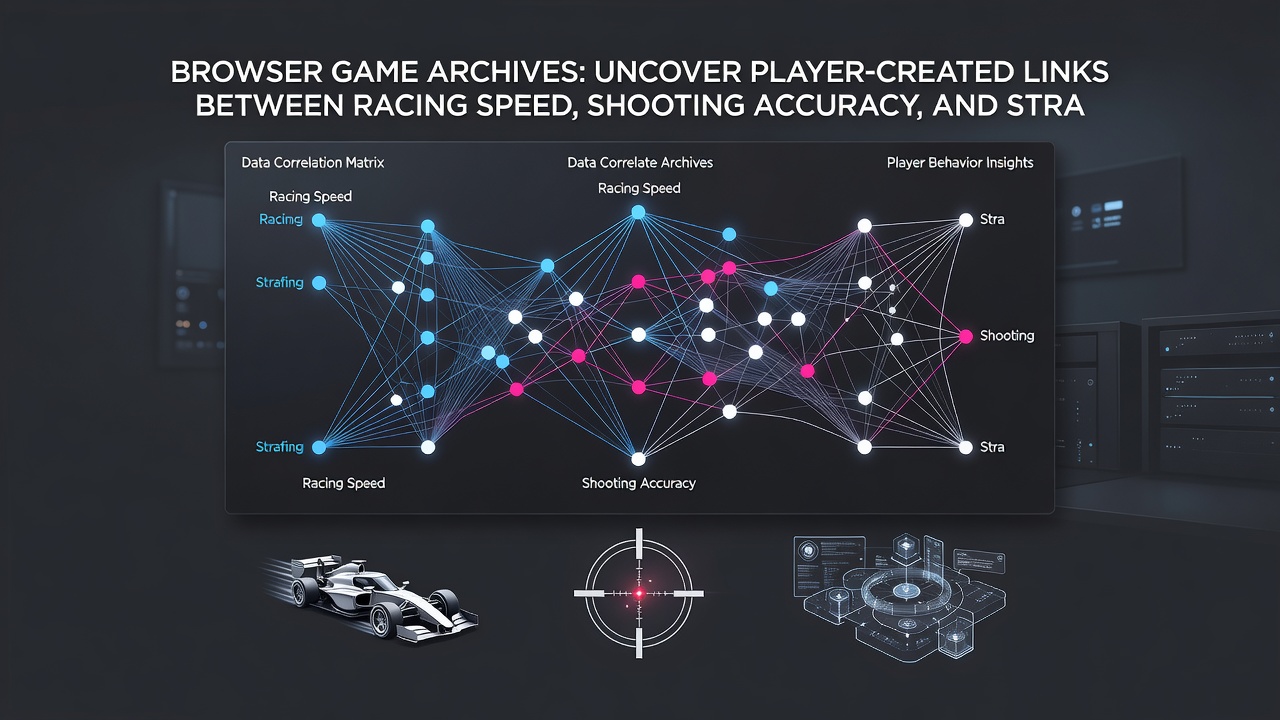
Archived chat transcripts and action timelines demonstrate that strategy planning sessions often reference prior racing maneuvers for positioning advice, while shooting accuracy metrics improve when teams apply route optimization techniques borrowed from speed trials. Researchers at institutions including the University of Melbourne have examined these patterns in reports on digital skill acquisition, noting measurable overlaps in cognitive load management across the three categories.
Platform Features Enabling Observation
No-download setups rely on web standards that preserve session continuity, and this technical foundation lets archives capture uninterrupted player journeys. Portals record metrics such as completion rates, error frequencies, and adaptation times when users pivot from one mechanic set to another. Evidence collected through these systems points to repeated instances where high racing performers adapt quickly to accuracy demands because both require sustained attention to velocity and trajectory calculations.
Additional records show that strategy components benefit from the same attention patterns, as players allocate mental resources across map navigation, threat assessment, and timing windows. Data collected through October 2026 sessions confirms that participants who alternate between genres within short windows maintain elevated performance levels compared with those who focus on single categories.
Conclusion
Browser game archives continue to accumulate evidence of these player-driven linkages, providing a growing body of session-level detail that connects racing speed, shooting accuracy, and strategy planning in no-download multiplayer environments. The patterns documented across repositories offer concrete examples of how participants build integrated skill sets through repeated cross-genre exposure, and ongoing data collection supports further examination of these relationships in future periods.