Web Portals Unite Puzzle Mazes, Racing Trials, and Shooter Coordination in Instant Access Formats
Logan Jenkins · Nov 6, 2026
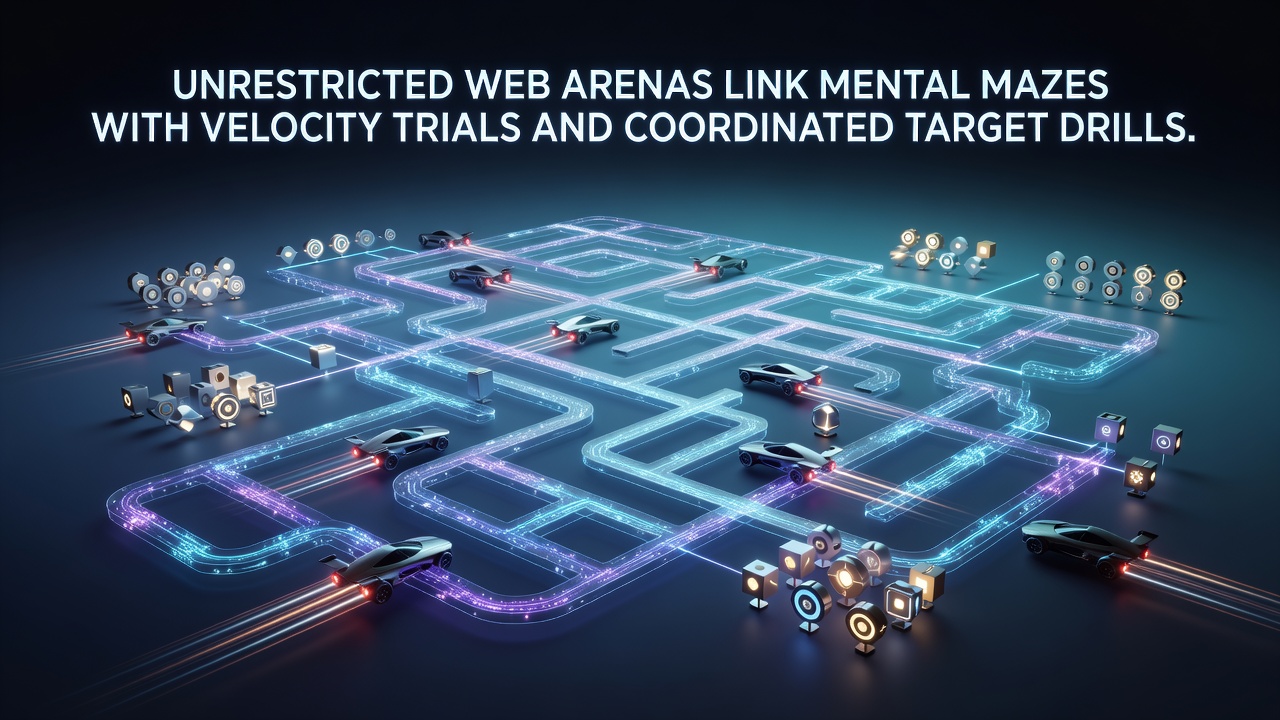
Web Portals Unite Puzzle Mazes, Racing Trials, and Shooter Coordination in Instant Access Formats
Free browser platforms have developed systems that connect puzzle-based mazes with high-speed racing sequences adn coordinated shooting exercises, allowing players to transition between cognitive mapping, velocity management, and precision targeting within single sessions. Data from industry reports indicate these hybrid environments emerged as developers adapted Flash-era mechanics to HTML5 standards, resulting in seamless no-download experiences that run across multiple devices.
Core Mechanics Across Game Types
Observers note that mental mazes require spatial reasoning and path optimization, while velocity trials demand timing adjustments and obstacle avoidance; coordinated target drills add layers of resource allocation and positional awareness. When combined, these elements create sessions where players solve navigation logic before entering timed races that incorporate shooting segments, with each phase influencing the next through shared scoring or progression systems. Research from the Entertainment Software Association shows browser game engagement rose steadily through 2025, with hybrid titles contributing to longer average play durations compared to single-genre experiences.
Platform Accessibility and Technical Integration
Web arenas operate without installations because HTML5 and WebGL handle rendering, physics calculations, and multiplayer synchronization directly in standard browsers. Players access these titles through portals that host libraries exceeding thousands of entries, many updated weekly to incorporate new puzzle variants or race layouts. In November 2026, platform analytics revealed increased traffic during evening hours across North American and European regions, coinciding wth cross-device play on desktops, tablets, and smartphones. Those who track usage patterns find that instant loading times under three seconds correlate with higher retention rates in games that blend the three core activity types.
Player Interaction Patterns
Individuals often begin with maze exploration to unlock racing routes, then apply targeting skills during competitive segments where multiple participants coordinate shots against shared objectives. Case examples from portal data illustrate how leaderboard systems reward combined performance across logic accuracy, lap completion speed, and hit percentages. One documented series tracks monthly tournaments that alternate emphasis between puzzle efficiency and velocity records while maintaining shooter accuracy thresholds for qualification. External links such as Entertainment Software Association reports document similar growth in browser-based multiplayer formats across different markets.

Community features within these arenas include real-time chat overlays and shared replays that highlight optimal maze-to-race transitions. Developers release periodic updates that refine physics models for racing segments and adjust targeting hitboxes to maintain balance across skill levels. Figures from academic sources, including studies hosted by institutions in Canada, indicate that players who engage with hybrid mechanics demonstrate improved performance in isolated puzzle or shooting tasks over repeated sessions.
Content Evolution Through 2026
By November 2026, several portals expanded their catalogs with seasonal events that layer holiday-themed mazes onto existing race tracks and introduce limited-time targeting challenges tied to group objectives. These additions maintain the core linkage between mental mapping, speed execution, and coordinated aiming while refreshing visual assets and reward structures. Industry organizations such as the International Game Developers Association have noted increased collaboration between independent creators working on modular game components that support easy integration of the three activity types. The result appears in consistent player migration between titles hosted on the same unrestricted platforms.
Technical and Design Considerations
Engine optimizations allow simultaneous loading of maze layouts, racing physics, and projectile systems without performance drops on mid-range hardware. Designers employ modular asset pipelines so that a single environmental change affects all three activity modes, reducing development time while preserving internal consistency. Data indicates portals that prioritize cross-genre connectivity experience lower bounce rates, as users remain engaged through varied but interconnected challenges. Those monitoring server metrics report stable concurrent user counts during peak periods, supported by lightweight networking protocols that handle both competitive and cooperative modes.
Conclusion
Free web arenas continue to connect mental mazes, velocity trials, and coordinated target drills through accessible browser technology, producing integrated experiences that draw from established mechanics while adapting to current device capabilities. Continued platform updates and event cycles sustain these connections, with usage data reflecting steady participation across regions as of late 2026.